
Sexual Abuse & Sexual Violence Awareness Week is an annual initiative that raises awareness of sexual abuse and sexual violence and highlights the need for prevention, support and access to justice. In 2026, it takes place from 3 – 8 February. It provides an opportunity to draw attention to the persistent challenges faced across Europe and to promote informed, evidence-based responses. More information about the initiative is available here.
Sexual violence in Europe
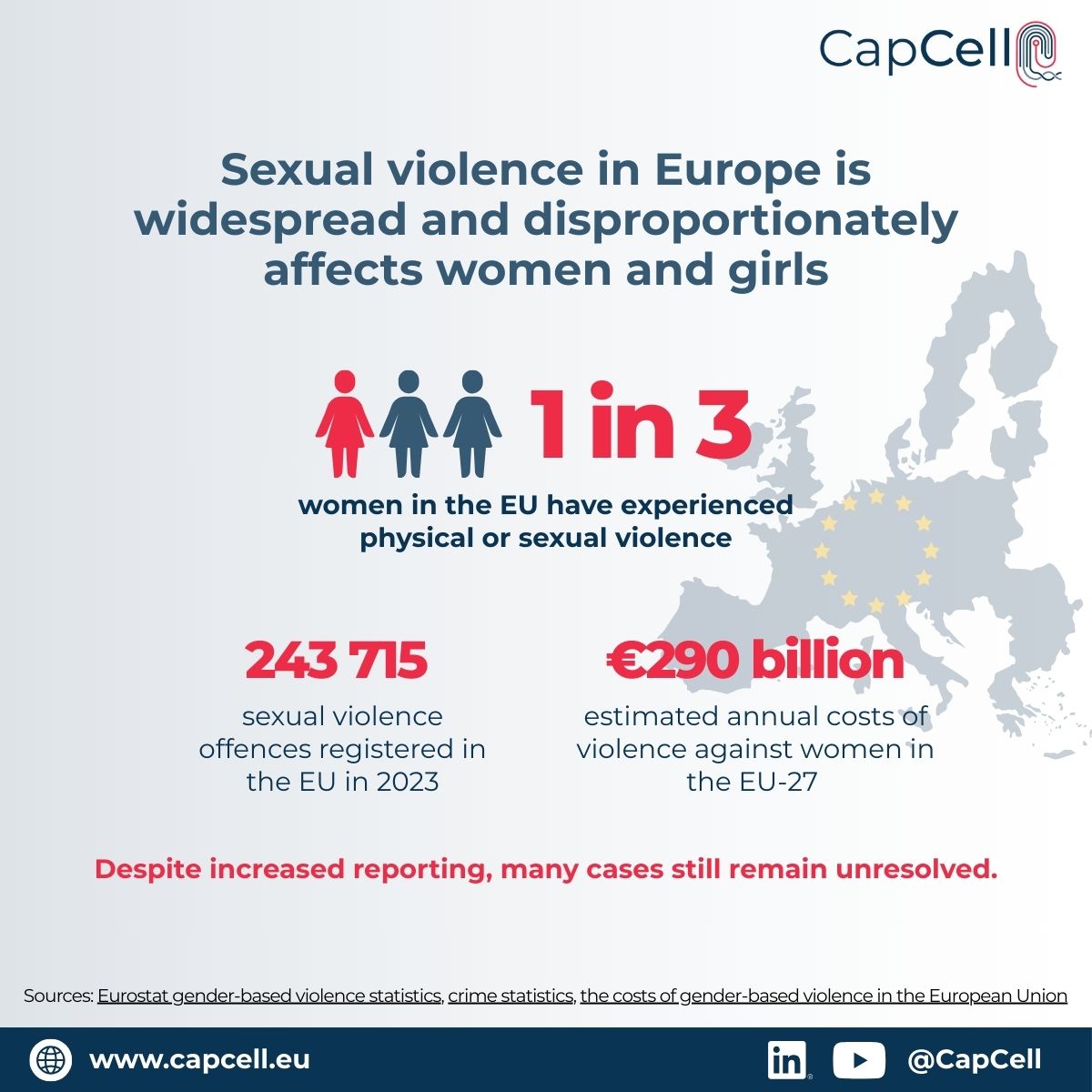
Sexual violence remains widespread across Europe and disproportionately affects women and girls. One in three women in the EU has experienced physical or sexual violence, and in 2023 alone, 243,715 sexual violence offences were registered across the EU. Beyond its human impact, violence against women is also associated with estimated annual costs of €290 billion in the EU-27. Despite increased reporting, many cases still fail to progress through the justice system.
The forensic evidence gap
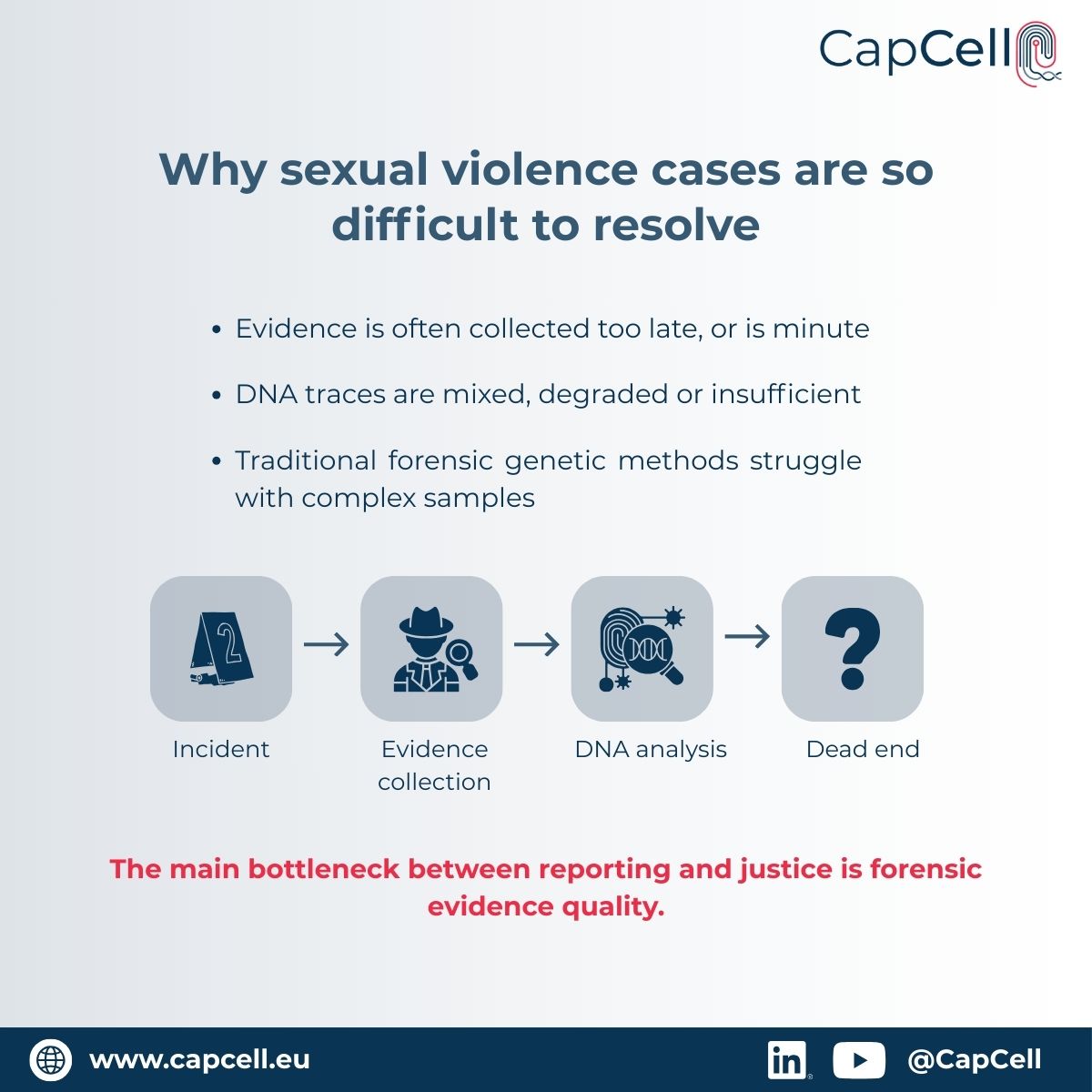
A key reason for this is the forensic evidence gap. In many sexual violence cases, evidence is collected too late or is minute, while biological traces are often mixed, degraded or insufficient. Traditional forensic genetic methods struggle to interpret such complex samples, making forensic evidence quality the main bottleneck between reporting and justice.
During Sexual Abuse & Sexual Violence Awareness Week, CapCell highlights the importance of reliable and interpretable forensic evidence in supporting accountability and access to justice. CapCell is an EU-funded Horizon Europe Research and Innovation Action addressing this challenge by developing innovative forensic approaches tailored to the realities of sexual violence casework.
CapCell innovations for improved justice
In line with this objective, CapCell focuses on three core contributions:
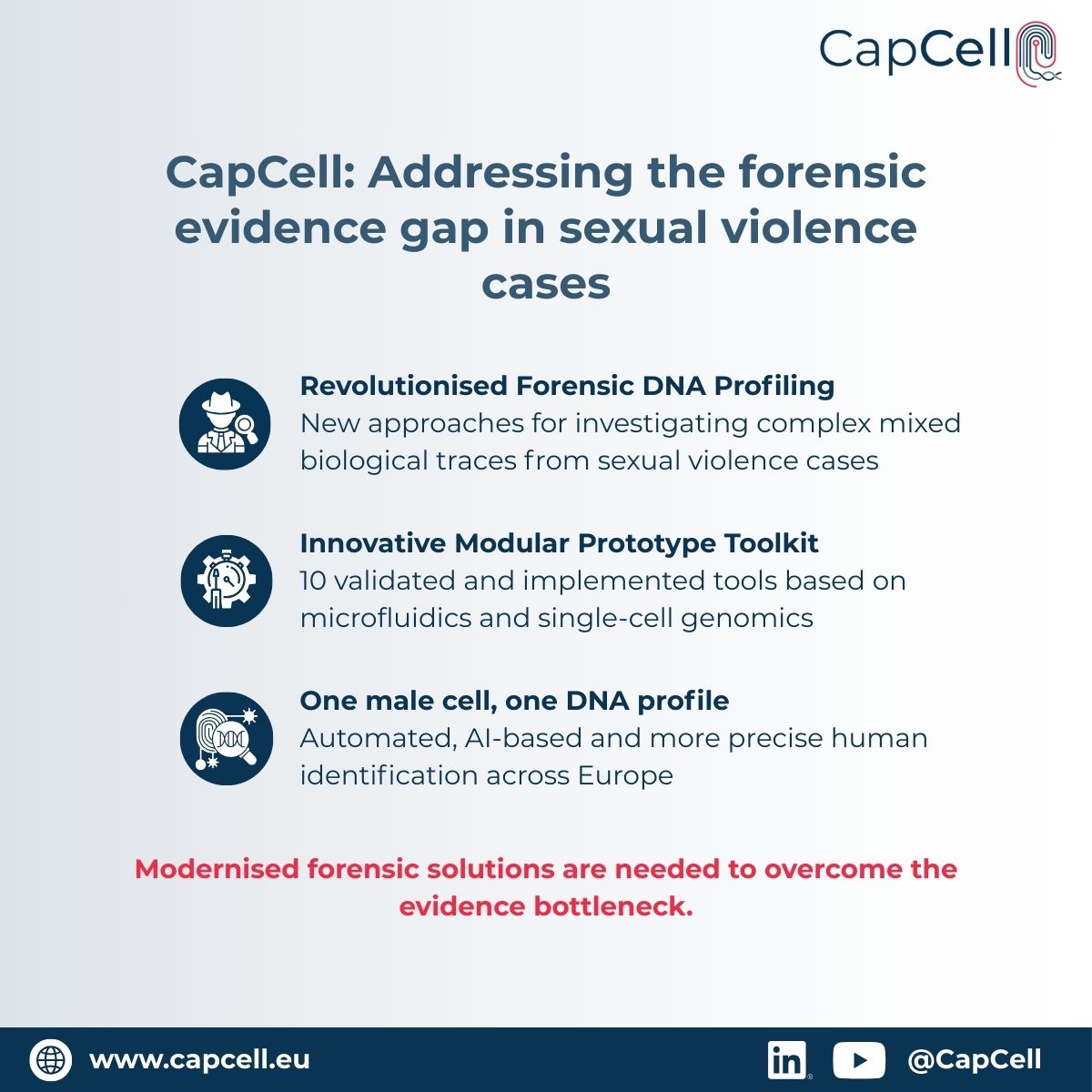
Revolutionising forensic DNA profiling by developing new approaches for investigating complex mixed biological traces from sexual violence cases.
Delivering an innovative modular prototype toolkit, consisting of ten validated and implemented tools based on microfluidics and single-cell genomics that can be integrated into existing forensic workflows.
Enabling more precise human identification, based on the principle of one male cell, one DNA profile, supported by automated and AI-based analysis across Europe.
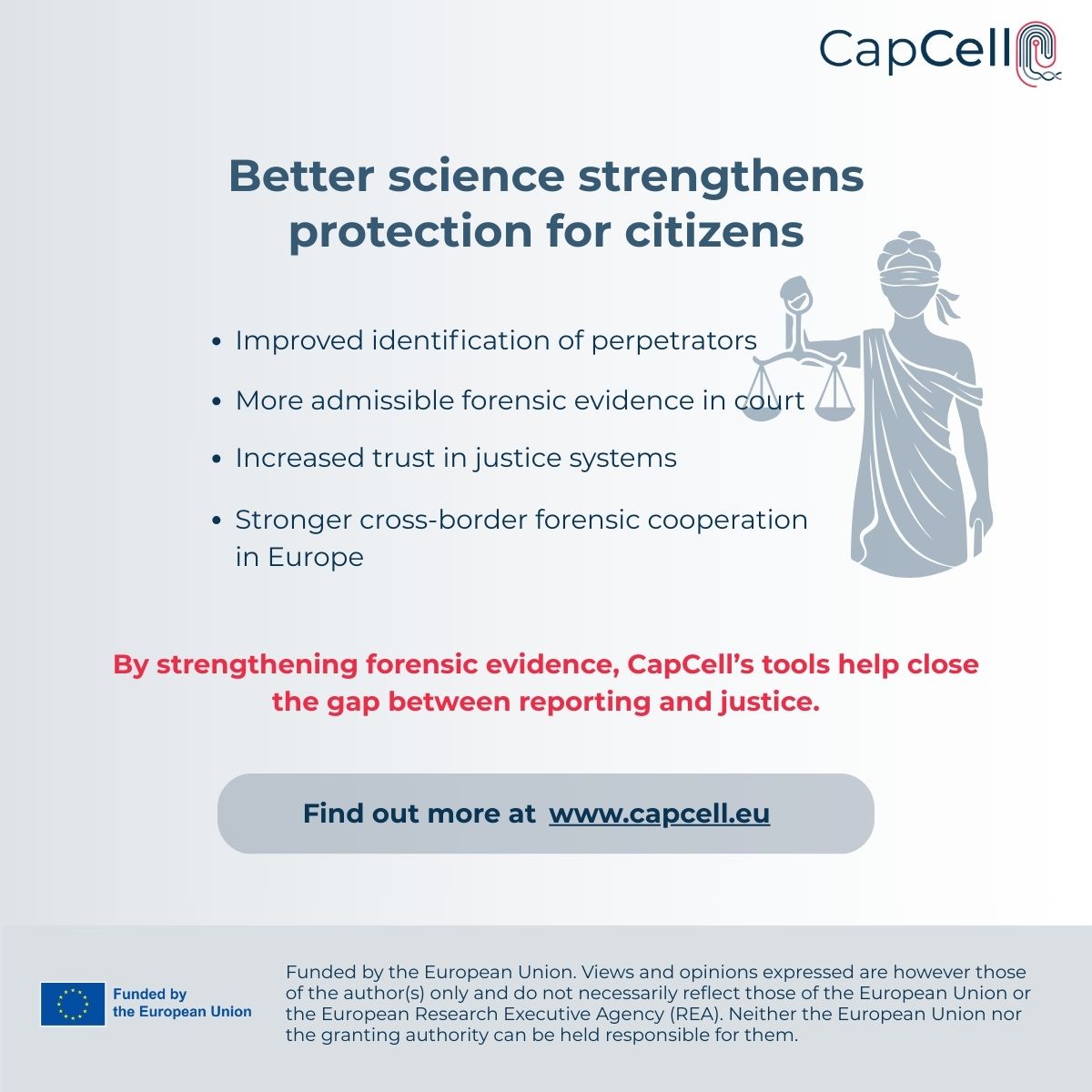
By strengthening forensic evidence, CapCell’s tools aim to help close the gap between reporting and justice. Through close collaboration with forensic institutes, police authorities and industry partners, and by validating its tools in operational environments, CapCell contributes to more robust evidence interpretation, improved identification of perpetrators, increased trust in justice systems and stronger cross-border forensic cooperation in Europe.