
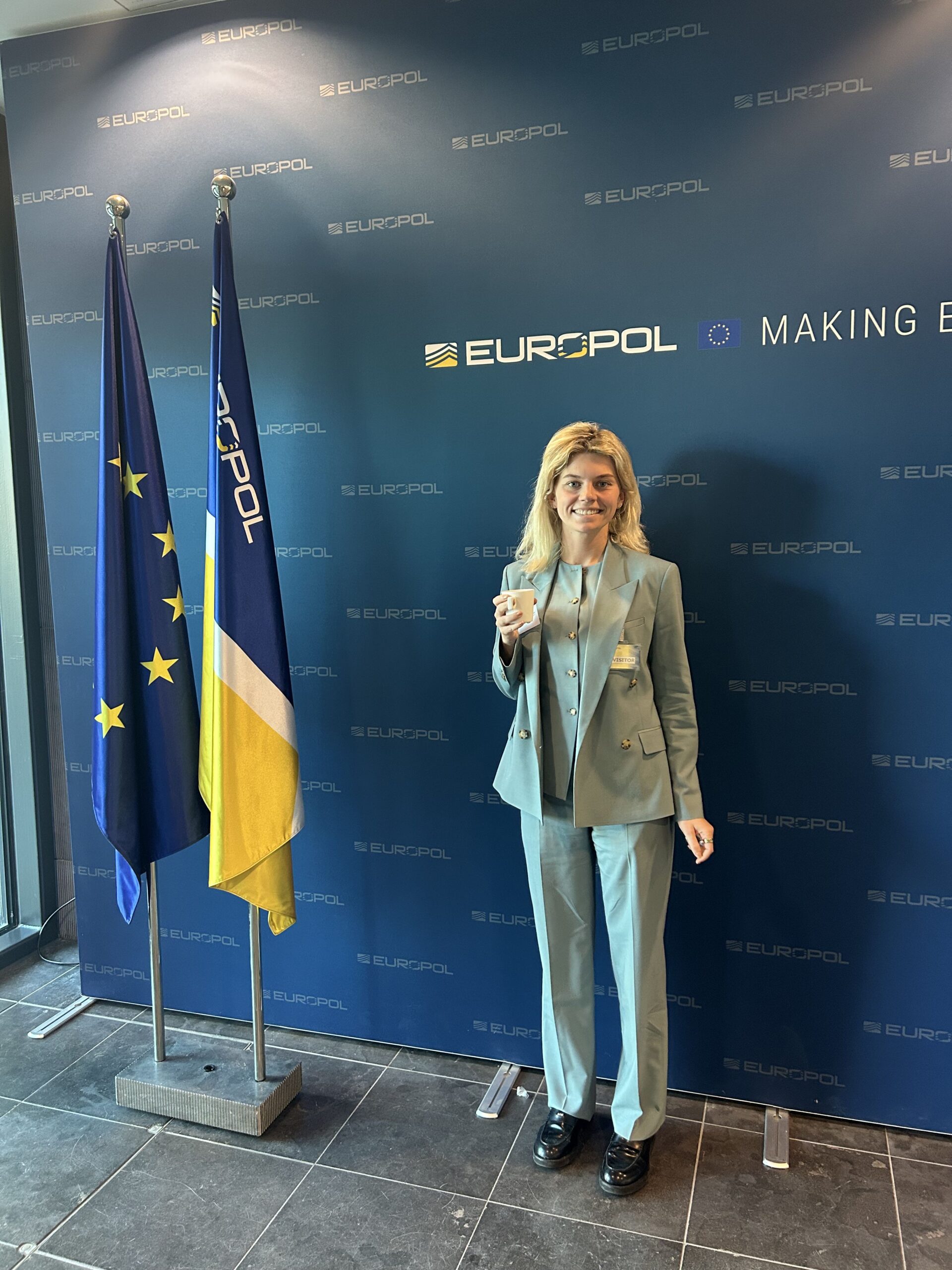
CapCell was pleased to participate in the first edition of Europol Innovation Lab’s “From Vision to Impact” event held from 7-8 April in the Hague, the Netherlands, which brought together Horizon Europe projects, law enforcement practitioners, and policy stakeholders working in the field of internal security.
Represented by Titia (NFI) and Alexandra (accelCH), CapCell contributed to discussions on a central challenge for Horizon Europe projects: ensuring that technologies move beyond development and are adopted in operational law enforcement environments.
The event emphasised that closing the gap between research and practice requires early and continuous dialogue between developers and end users. A key focus was “uptake”, meaning the effective use of project results in real investigations, and the barriers that hinder it, including limited alignment with operational workflows and insufficient early engagement.
CapCell’s approach: embedding end-user relevance from the start
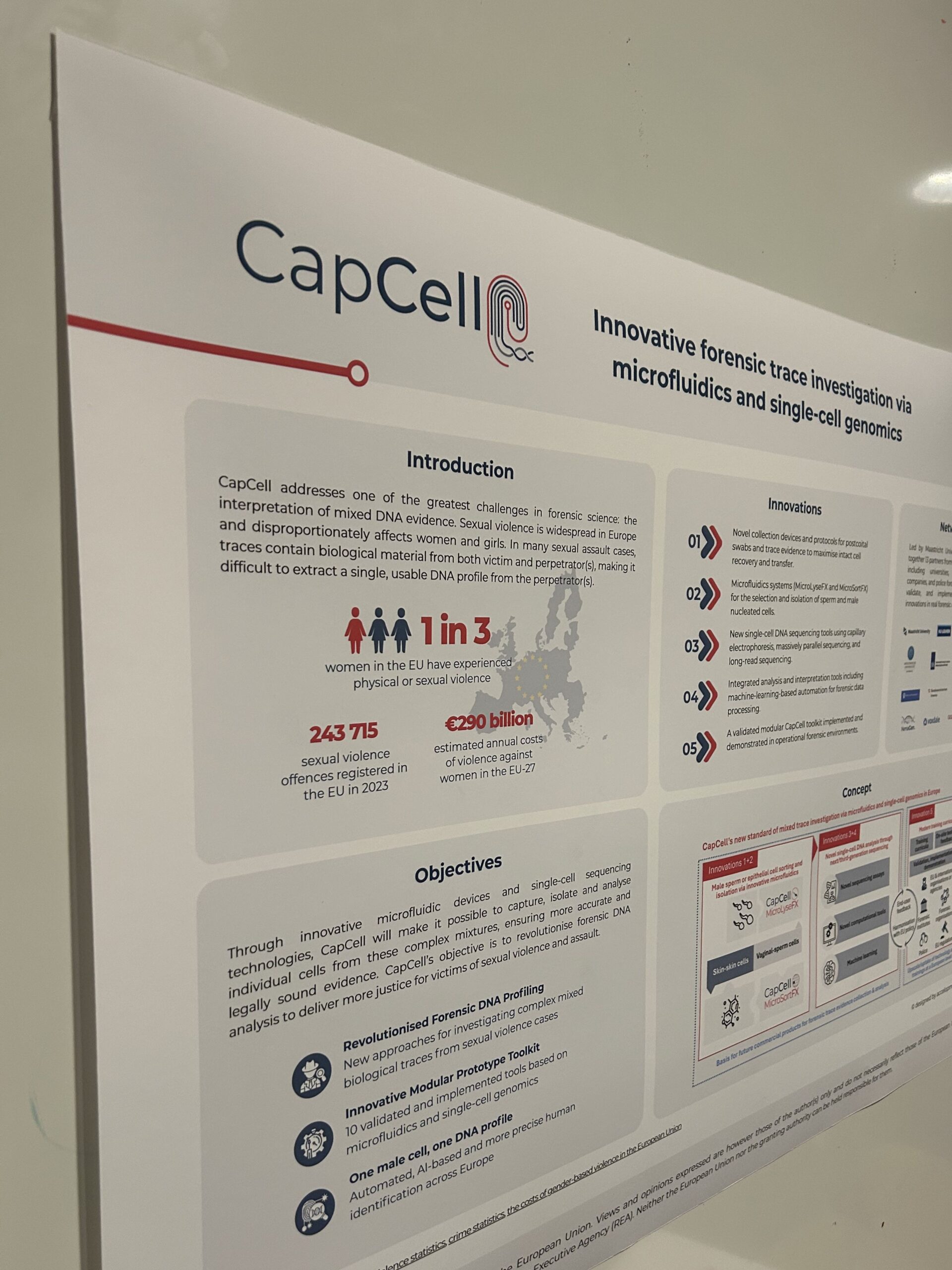
CapCell’s work directly addresses these challenges. The project develops a forensic toolkit combining microfluidics and single-cell genomics to improve the analysis of complex DNA mixtures, particularly in sexual assault cases. Ensuring operational relevance and usability by practitioners is a core objective.
The role of Europol Innovation Lab
The Europol Innovation Lab plays a key role in supporting this process by connecting researchers with law enforcement practitioners and providing platforms and services that facilitate the transition from research results to operational tools. Its activities help Horizon Europe projects better understand user needs and pathways to deployment.

CapCell's current work to ensure uptake
To avoid the “valley of death”, CapCell has implemented a structured, partner-driven approach:
- Stakeholder engagement led by MUI and accelCH: continuous interaction with forensic laboratories, law enforcement authorities and networks (e.g. ENFSI, EDNAP, Europol) to align developments with operational needs
- User-centred development with EFSI and forensic practitioners: ensuring modules integrate into existing laboratory workflows and address real casework challenges
- End-user research led by MUI: a report produced in M6 (Deliverable 2.1, results will be made publicly available) to capture forensic practitioner insights into sexual assault casework and challenges in sexual-assault casework and inform the development of an operationally feasible toolkit addressing unmet needs.
- User focus groups organised by MUI with support from accelCH: targeted consultations (6–10 participants) to identify bottlenecks in sexual assault casework and validate technical solutions
- Security Cluster activities coordinated by MUI: collaboration with peer projects to exchange knowledge, align approaches and support uptake across the EU security ecosystem
- Communication and dissemination activities led by accelCH: cross-channel outreach, events and materials to increase visibility, gather feedback and support validation of results
This structured approach ensures that CapCell technologies are continuously refined through practitioner input and remain aligned with forensic, legal and operational requirements, supporting their validation and future adoption